

The Narrative
The market loves a good story, and right now, the story is that Airbnb is an ESG darling. Analysts point to their “top-notch” ESG scores as proof of a sustainable, forward-thinking company. They’ve managed to convince the world that they represent the “sharing economy,” a phrase that sounds great in a marketing deck but means nothing on a balance sheet. Because of this halo effect, the market has tacked a massive premium onto their stock. It’s the classic 2021 clean-energy bubble playbook: if it feels good, pay more for it.
The Data
I’ve spent 30 years watching funds destroy capital by chasing narratives instead of numbers, and this is a textbook case. Let’s look at the actual unit economics vs. the story. Airbnb currently enjoys a 20% valuation premium solely attributed to its ESG rating.
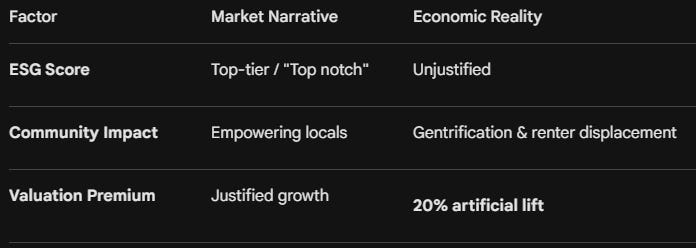
Their business model exists to chase renters out of the market and gentrify your area. When you look at the mechanics, the valuation is 20% higher because of an unjustified ESG rating. If you peel that rating off, the valuation drops massively. That is the reality the market is choosing to ignore.
The Helix View
I am amazed at how easily investors get blinded by a “green” sticker. At Helix, we don’t care about saving the planet; we care about whether the unit economics make sense. This is a “smoke and mirrors” play where the social component of ESG is actually a liability disguised as an asset. We are publishing our position because we believe the most overlooked opportunities sit at the intersection of sustainability and boring, high-margin economics—not in companies that rely on regulatory blind spots and social displacement to juice their margins.
We might be early on this, and being early often looks exactly like being wrong. We will likely underperform the index for the next 12 months while this thesis ripens, but we are trading short-term pain for structural alpha. If you need quarterly dopamine hits, this trade will make you miserable.
The Binary Choice: You either believe that ESG ratings will continue to be disconnected from the actual social impact on housing markets, or you believe the market will eventually price in the regulatory and social cost of gentrification. If you don’t believe the latter, don’t take the position.
The next decade of alpha won't come from following the herd into overpriced ESG darlings. It will come from finding the structural advantages others are too blind to see. Reply to this email to receive a copy of our factsheet.


